
Supreme Leader's Son Missing as Officials Mourn Ayatollah's Death
Iran's senior officials attend ayatollah's funeral while Mojtaba Khamenei remains absent from public view following the recent attack.
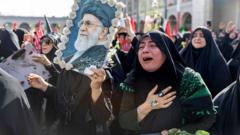
Mojtaba Khamenei Absent from Public Following Ayatollah's Death
In a significant development marking the ongoing tensions in the Middle East, Mojtaba Khamenei, son of Iran's supreme leader, has notably remained out of public sight during the funeral proceedings of his father. This absence has raised concerns among analysts and observers monitoring the situation closely, as senior officials from across Iran's government have gathered to pay respects to the late ayatollah.
The funeral ceremony has drawn high-ranking government representatives, military commanders, and religious leaders who have come to honor the deceased. However, the noticeable absence of the supreme leader's son during these proceedings has become a focal point of international attention. The last confirmed public sighting of Mojtaba Khamenei occurred before the military attack that claimed his father's life at the beginning of the escalating conflict between Iran and the combined forces of the United States and Israel.
The Attack and Its Aftermath
The incident that precipitated these developments unfolded as tensions between Iran and Western powers reached a critical point. The attack, which occurred during the initial phases of hostilities between Iran and the US-Israel coalition, resulted in the death of the supreme leader and sent shockwaves throughout the Iranian government and general population. In the days and weeks following this devastating event, the nation has been grappling with both the loss of its leader and the broader implications for regional stability.
The timing of the attack coincided with an already volatile period of escalation, making the death of Iran's supreme leader particularly consequential for geopolitical dynamics. Intelligence analysts have been closely monitoring how the Iranian government manages the transition period and maintains control during this vulnerable window of uncertainty and potential instability.
Senior Officials' Presence at the Funeral
Despite the absence of Mojtaba Khamenei, the funeral has witnessed extensive participation from Iran's governmental hierarchy. Military leaders, clerical authorities, and cabinet members have all made appearances, demonstrating institutional continuity during a period of significant transition. These officials' presence serves as a public reassurance to both the domestic population and the international community regarding the stability of Iran's governance structures.
The attendance of such prominent figures represents a critical moment in Iran's political landscape, where the visual representation of unity and organized succession becomes essential. Many observers have noted that the funeral proceedings themselves carry deep symbolic weight, functioning as both a tribute to the deceased leader and a demonstration of the regime's resilience.
Questions Surrounding Mojtaba Khamenei's Location
The conspicuous absence of Mojtaba Khamenei has sparked numerous questions within media circles and among political analysts. His disappearance from public life has fueled speculation about his potential role in future political developments, his physical well-being, and the security measures that may be surrounding members of the supreme leader's family. Some observers have suggested that strategic considerations may be driving decisions about which family members appear at public events during this sensitive period.
The dynamics within Iran's power structure during succession moments have historically been complex, with various factions and interests competing for influence. The absence of the late supreme leader's son from visible proceedings may reflect calculated decisions about succession planning, security protocols, or internal political maneuvering that remains largely opaque to outside observers.
Regional and International Implications
The death of Iran's supreme leader during an active conflict with United States and Israeli forces represents a watershed moment with far-reaching consequences. The international community has been closely examining how these developments might influence the trajectory of the broader regional conflict and whether the loss of leadership will prompt shifts in Iranian policy or military strategy.
This funeral and the surrounding political circumstances have underscored the intersection of internal succession dynamics and external security threats facing Iran. As senior officials continue to manage both the mourning process and governmental operations, the prolonged absence of key family members like Mojtaba Khamenei adds another layer of complexity to an already intricate political situation. The coming weeks and months will likely reveal more about how Iran's leadership intends to navigate these unprecedented challenges and maintain institutional stability in the face of significant adversity.