
Trump Backs United Ireland Vision During Republic Visit
US President Donald Trump expresses support for Irish unification during Ireland visit, suggesting it should happen now. UK and unionists respond swiftly.
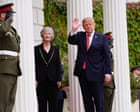
Trump Endorses Irish Unification During Republic Trip
During his visit to the Republic of Ireland, US President Donald Trump has expressed strong support for the concept of a united Ireland, stating he would "love" to see the island unified. Trump's remarks regarding Irish unification represent an unexpected political intervention that has reverberated across both sides of the Irish border and beyond.
The American leader made the comments on Saturday at the beginning of a two-day official visit to Ireland. According to Trump's perspective on the matter, the unification of Ireland will ultimately occur regardless, so "it may as well happen now," he suggested. This statement signals a departure from typical diplomatic neutrality on the sensitive matter of Irish unification.
Political Implications and Reactions
Trump's unexpected endorsement of Irish unification prompted immediate and firm responses from key political figures. The UK government swiftly rebutted the American president's comments, emphasizing its position on the matter. Northern Ireland's unionist political leaders also responded quickly to Trump's remarks, expressing their opposition to any push for constitutional change on the island.
The intervention by the US president during his Republic of Ireland visit underscores how sensitive the question of Irish unification remains, even on the international stage. Political observers noted that such statements from a sitting American president represent a rare public commentary on this traditionally delicate issue between Ireland, Northern Ireland, and the United Kingdom.
Understanding the Context of Irish Unification
The concept of a united Ireland remains one of the most contentious political questions in European politics. The island of Ireland is currently divided between the Republic of Ireland, an independent nation, and Northern Ireland, which remains part of the United Kingdom. This division has its roots in Irish history and continues to shape political discourse across the island.
Constitutional change regarding the status of Northern Ireland represents a significant political aspiration for Irish nationalists and republicans, who argue that Irish unification would be a natural outcome of democratic principles. Conversely, unionists in Northern Ireland maintain strong ties to the United Kingdom and oppose any change to the constitutional arrangement.
Trump's Position on International Relations
The US president's comments during his Ireland visit reveal his willingness to engage with contentious international political matters. Trump has previously made unconventional statements on various global issues, often departing from established diplomatic protocols. His remarks about Irish unification fit this pattern of direct political commentary.
The timing of Trump's statement during an official visit to the Republic of Ireland adds weight to his words. Such visits typically provide platforms for diplomatic messaging, and the president's decision to address the unification question directly suggests this was not an off-the-cuff remark but rather a considered position.
Historical Context of the Irish Question
The partition of Ireland dates back to 1921, when the island was divided following the Irish War of Independence. This division has remained a defining feature of Irish and British politics for over a century. The question of Irish unification periodically resurfaces in political discourse, particularly during times of political change or international engagement.
Throughout history, various international figures have commented on Irish affairs, reflecting the global interest in this enduring political question. However, direct statements of support for unification from a sitting US president remain relatively uncommon, making Trump's remarks noteworthy from a historical perspective.
Diplomatic Fallout and Future Implications
The swift responses from the UK government and Northern Ireland's unionist leaders indicate that Trump's comments have been taken seriously by those opposed to Irish unification. Diplomatic channels may be activated to address the American president's intervention and clarify positions on this sensitive matter.
Looking forward, Trump's statement raises questions about how international figures might engage with the question of Irish unification. Whether his remarks will have lasting diplomatic consequences or influence political developments on the island remains to be seen. What is clear is that a sitting US president's public support for unification represents a significant moment in the ongoing discourse surrounding this complex political question.