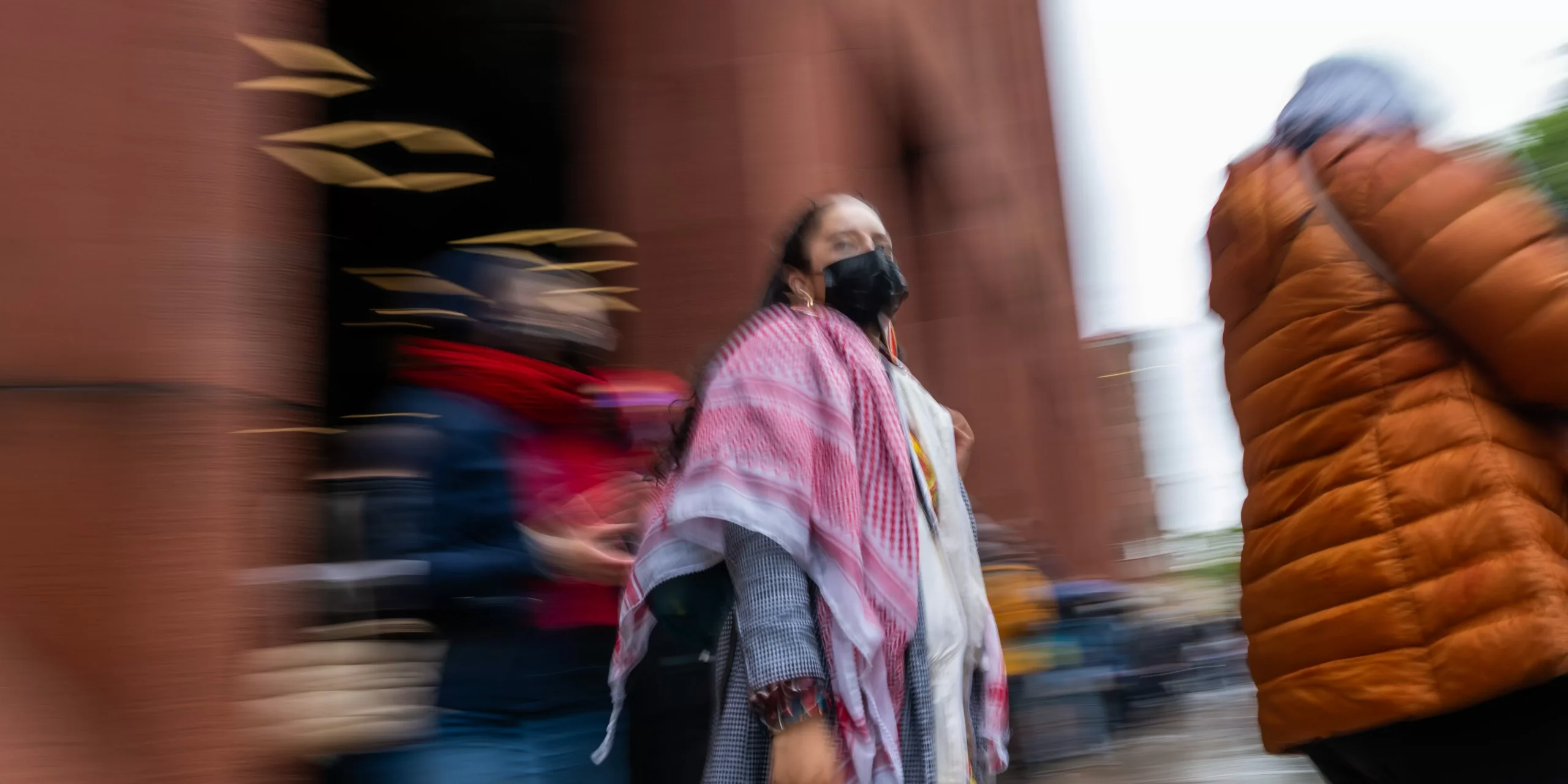
In recent years, college campuses have become a hotbed for activism and peaceful protests. These movements have sparked important discussions and have led to positive change on many campuses. However, there are also instances where these protests are met with resistance and even punishment. This is exactly what happened at New York University (NYU) when students were banned from campus buildings following peaceful sit-ins.
The students, who were part of a group called NYU Law Students for Justice in Palestine, were protesting the school’s ties to Israel and its treatment of Palestinians. They peacefully occupied the Kimmel Center for University Life and the Office of the President to demand that NYU divest from companies that profit from the Israeli occupation. However, instead of engaging in a dialogue with the students, the university chose to ban them from campus buildings and threaten their academic progress.
This decision by NYU has sparked outrage among students and faculty alike. The university’s disciplinary processes have been called into question, with many arguing that they have broken from school policies. According to the NYU Student Handbook, “the university will not discipline students for engaging in peaceful protests, demonstrations, and picketing.” However, the ban on these students seems to contradict this policy.
The NYU Law Students for Justice in Palestine released a statement, saying, “The university’s decision to ban us from campus buildings is a clear violation of our rights to freedom of speech and assembly. We were peacefully protesting and exercising our right to express our political views. This ban is an attempt to silence our voices and suppress our activism.”
Furthermore, the ban also raises concerns about the university’s commitment to academic freedom. NYU has a reputation for being a progressive and inclusive institution, but this action sends a message that the university is not willing to stand by its students when they exercise their right to protest. By threatening to bar students from sitting final exams, the university is essentially punishing them for their activism.
In response to the ban, The Intercept published an article titled “NYU Demands Law Students Renounce Protests or Be Barred from Sitting Final Exams.” The article sheds light on the unjust treatment of these students and highlights the importance of protecting freedom of speech and peaceful protest on college campuses. It also questions the motivations behind the university’s actions and urges NYU to reconsider its decision.
As stated in the article, “NYU’s response to the peaceful protests is concerning and goes against the values of academic freedom and freedom of speech that universities should uphold. By punishing these students, the university is sending a chilling message to all students that their activism will not be tolerated.”
The piece also brings attention to the fact that this is not an isolated incident. Many universities across the country have been targeting student activists and punishing them for their peaceful protests. This trend is alarming and threatens the very essence of academic freedom and critical thinking that universities are meant to foster.
The article also highlights the resilience and determination of the NYU Law Students for Justice in Palestine, who have refused to be silenced by the university’s actions. Their commitment to their cause and their right to protest serves as an inspiration to students everywhere.
In conclusion, it is essential for universities to uphold the principles of academic freedom and protect the rights of students to peacefully protest. NYU’s decision to ban these students from campus buildings and threaten their academic progress is not only a violation of their rights but also goes against the values of a progressive and inclusive institution. It is time for NYU to reconsider its actions and engage in a meaningful dialogue with these students. As a well-respected university, NYU has the opportunity to set an example for other institutions and promote a culture of open-mindedness and free expression. Let us hope that NYU takes this opportunity to rectify the situation and reaffirm its commitment to academic freedom and student activism.